Lunar New Year – The Traditional Festival of the Vietnamese People
Lunar New Year is the largest, oldest, and most widely celebrated traditional festival, a vibrant and bustling holiday for the entire nation. It is the first and most important of Vietnam’s traditional festivals, reflecting the harmony between humanity and nature according to the cyclical operation of the universe, manifested in the successive cycles of spring, summer, autumn, and winter. The word “Nguyên” means beginning, and “Đán” means morning, the start of a new year.
According to folk beliefs, stemming from the concept of “Thanks to Heaven for timely rain and sunshine,” farmers also consider this an occasion to commemorate deities associated with agriculture such as the Earth God, Rain God, Thunder God, and Water God… and they also do not forget the animals that have worked alongside them day and night, such as buffaloes, cows, livestock, poultry, and the crops that have sustained them.
At the same time, Tet is also an occasion for families, relatives, neighbors, and loved ones near and far to reunite, visit, exchange greetings and good wishes, and remember and express gratitude to their ancestors. “Returning home for Tet” is not just a concept of going home; behind it lies a whole process of pilgrimage back to one’s roots, to the place where one was born and raised. Vietnamese people have a custom that, every time the year ends and Tet arrives, no matter what profession they have or where they live, they still try to return to reunite under the family roof, to pray before the ancestral altar, to see their beloved home, the place where they were born, where their little feet once played, and where they grew into adults. During Tet, kinship and neighborly relationships are strengthened, becoming a shared moral obligation for society. Tet is also a time to summarize all activities related to the old year and welcome a new year with hopes for good fortune for individuals and the community as a whole.
Depending on the region or the religious beliefs of the Vietnamese people, customs and traditions often differ slightly from one locality to another. However, generally speaking, the traditional customs of Tet (Lunar New Year) are divided into three periods: the end of the year, New Year’s Eve, and the beginning of the new year. Each period corresponds to different preparations, rituals, and forms of expression, including typical activities such as: bidding farewell to the Kitchen God on the 23rd day of the 12th lunar month, cleaning the house, going to the Tet market, making banh chung (traditional rice cakes), visiting ancestral graves, offering sacrifices on New Year’s Eve, picking lucky branches, house blessing, wishing Happy New Year, giving lucky money, visiting temples at the beginning of the year, and seeking auspicious calligraphy. Tet Nguyen Dan (Lunar New Year) is a cultural activity that both preserves traditional values and adapts to modern life. Many beautiful and humane customs remain during Tet that Vietnamese people should preserve and promote so that Tet Nguyen Dan remains a unique cultural feature of the Vietnamese nation.
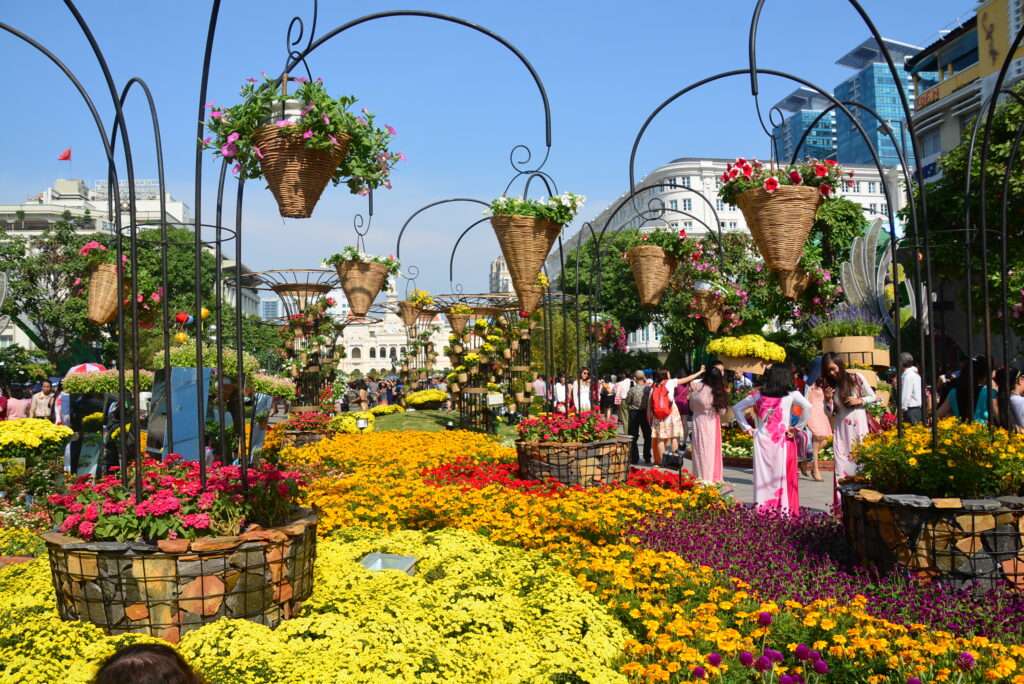
(Tết Nguyên Đán – Tết cổ truyền của dân tộc Việt Nam
Tết Nguyên Đán là ngày hội cổ truyền lớn nhất, lâu đời nhất, có phạm vi phổ biến rộng và là ngày lễ tưng bừng, nhộn nhịp của cả dân tộc. Tết là khâu đầu tiên và quan trọng nhất trong các lễ hội truyền thống của Việt Nam, phản ánh tinh thần hòa điệu giữa con người và thiên nhiên theo chu kỳ vận hành của vũ trụ, biểu hiện ở sự chu chuyển lần lượt các mùa Xuân – Hạ – Thu – Đông. Chữ Nguyên có nghĩa là bắt đầu, chữ Đán có nghĩa là buổi ban mai, là khởi điểm của một năm mới.
Theo tín ngưỡng dân gian, từ quan niệm “Ơn trời mưa nắng phải thì”, người nông dân còn cho đây là dịp để tưởng nhớ các vị thần linh có liên quan đến nông nghiệp như thần Đất, thần Mưa, thần Sấm, thần Nước… và họ cũng không quên ơn các loài vật đã cùng họ sớm hôm vất vả như trâu, bò, gia súc, gia cầm và các loại cây lương thực, thực phẩm đã nuôi sống họ.
Đồng thời, Tết cũng là dịp để gia đình, họ hàng, làng xóm, người thân xa gần sum họp, đoàn tụ thăm hỏi, cầu chúc nhau và tưởng nhớ, tri ân ông bà tổ tiên. “Về quê ăn Tết” không chỉ là khái niệm đi về, mà đằng sau nó là cả một quá trình hành hương về với cội nguồn, về nơi chôn nhau cắt rốn. Người Việt Nam có phong tục, mỗi khi năm hết, Tết đến, dù làm bất cứ nghề gì, ở bất cứ nơi đâu vẫn cố gắng để về sum họp dưới mái ấm gia đình, được khấn vái dưới bàn thờ tổ tiên, nhìn lại ngôi nhà thân yêu, nơi cất tiếng khóc chào đời, nơi mà một thời bàn chân bé dại đã tung tăng, rồi khôn lớn thành người. Cũng trong những ngày Tết, mối quan hệ họ hàng làng xóm được mở rộng ra, ràng buộc lẫn nhau thành đạo lý chung cho xã hội. Tết cũng là dịp tổng kết mọi hoạt động liên quan đến năm cũ, chào đón một năm mới với hy vọng tốt lành cho cá nhân và cả cộng đồng.
Tuỳ theo mỗi vùng miền hoặc theo những quan niệm về tôn giáo của người Việt, các phong tục tập quán ở từng địa phương thường có đôi nét khác biệt. Nhưng xét về tổng thể, phong tục truyền thống của ngày Tết được chia làm ba khoảng thời gian, gồm: Tất niên, Giao thừa và Tân niên. Mỗi khoảng thời gian ứng với những sự chuẩn bị, lễ nghi và hình thức thể hiện khác nhau, trong đó tiêu biểu là các hoạt động: tiễn ông Công, ông Táo về trời vào ngày 23 tháng Chạp, dọn dẹp nhà cửa, đi chợ tết, gói bánh chưng, thăm mộ tổ tiên, cúng giao thừa, hái lộc, xông nhà, chúc tết, mừng tuổi, đi lễ chùa đầu năm, xin chữ… Tết Nguyên Đán là một sinh hoạt văn hóa vừa lưu giữ được những giá trị truyền thống vừa thích nghi với nhịp sống hiện đại. Trong ngày Tết vẫn còn nhiều phong tục tốt đẹp và đậm tính nhân văn mà người Việt Nam cần giữ gìn và phát huy để Tết Nguyên Đán mãi là nét văn hoá đặc sắc của dân tộc Việt Nam.)
Leave a comment